
Keep your %%teams aligned%% and your %%margins protected%%, at scale
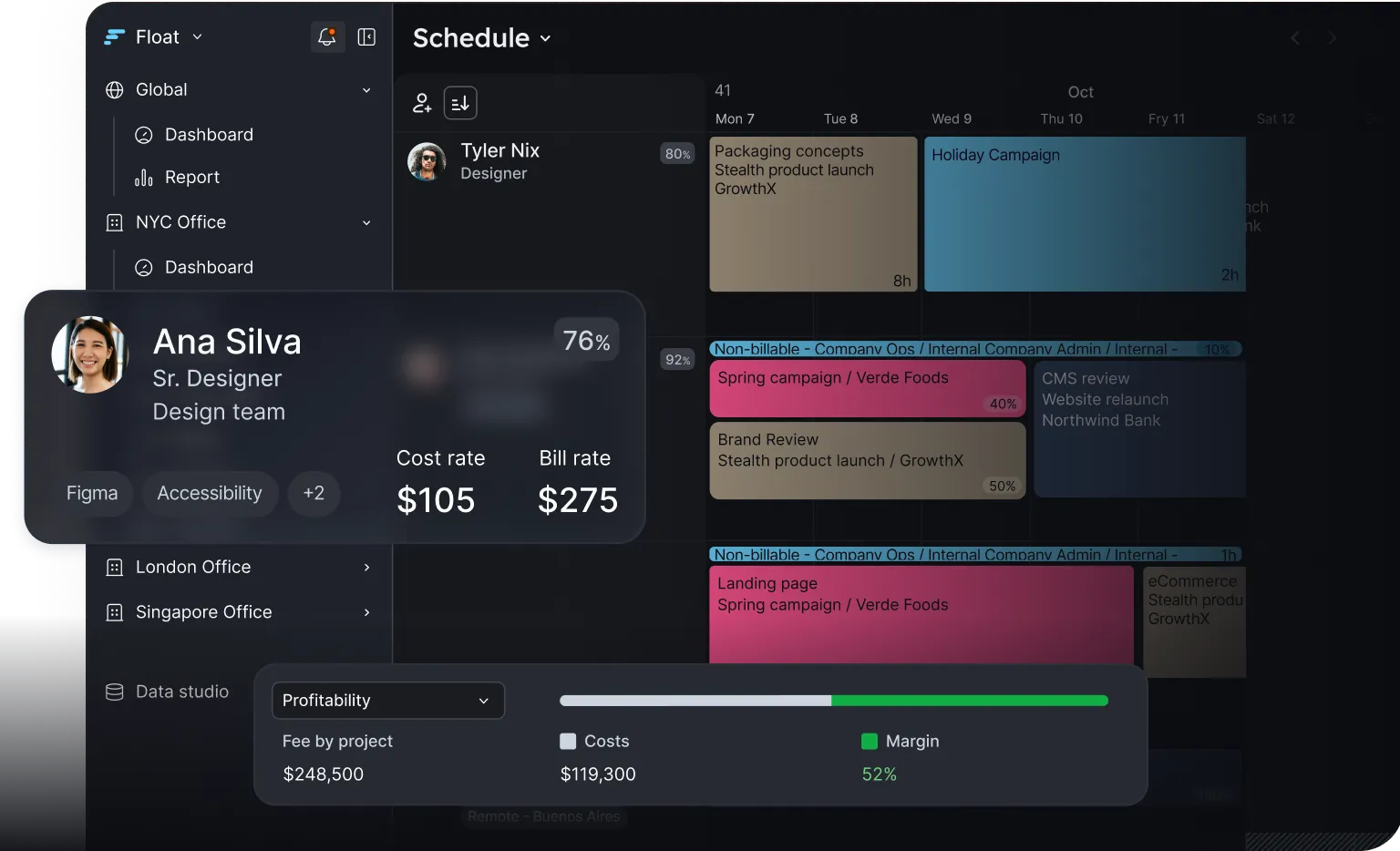
Float gives mid‑market agencies a unified, real‑time picture of delivery: who’s working on what, whether utilization is slipping, and where margin is heading.
Trusted by the world’s leading independent agencies and mid-market firms
















Stop paying the delivery tax.
It’s the hidden cost of manual workarounds, wasted capacity, and margin drops spotted too late. You pay this tax every day: in chaos, overtime, turnover, and profit.
Until you switch to Float.
Maximize utilization without stalling delivery
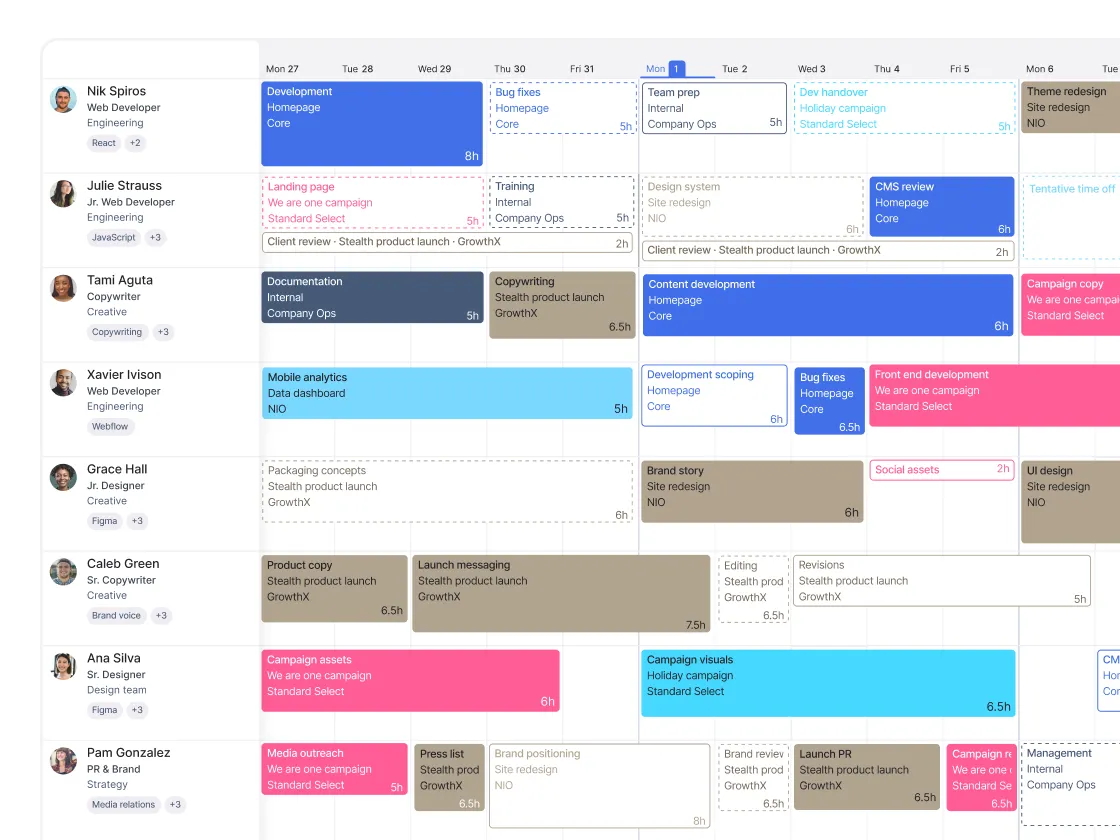
Once your team grows past 50 people, you can’t keep track of who’s free by shouting across the room or checking a single calendar.
Float puts everyone’s availability, skills, and experience in one place, meaning you get the right people on every project and keep delivery on track.
Protect margin across every project
With hundreds of projects in flight, delivery details can’t live in someone’s head.
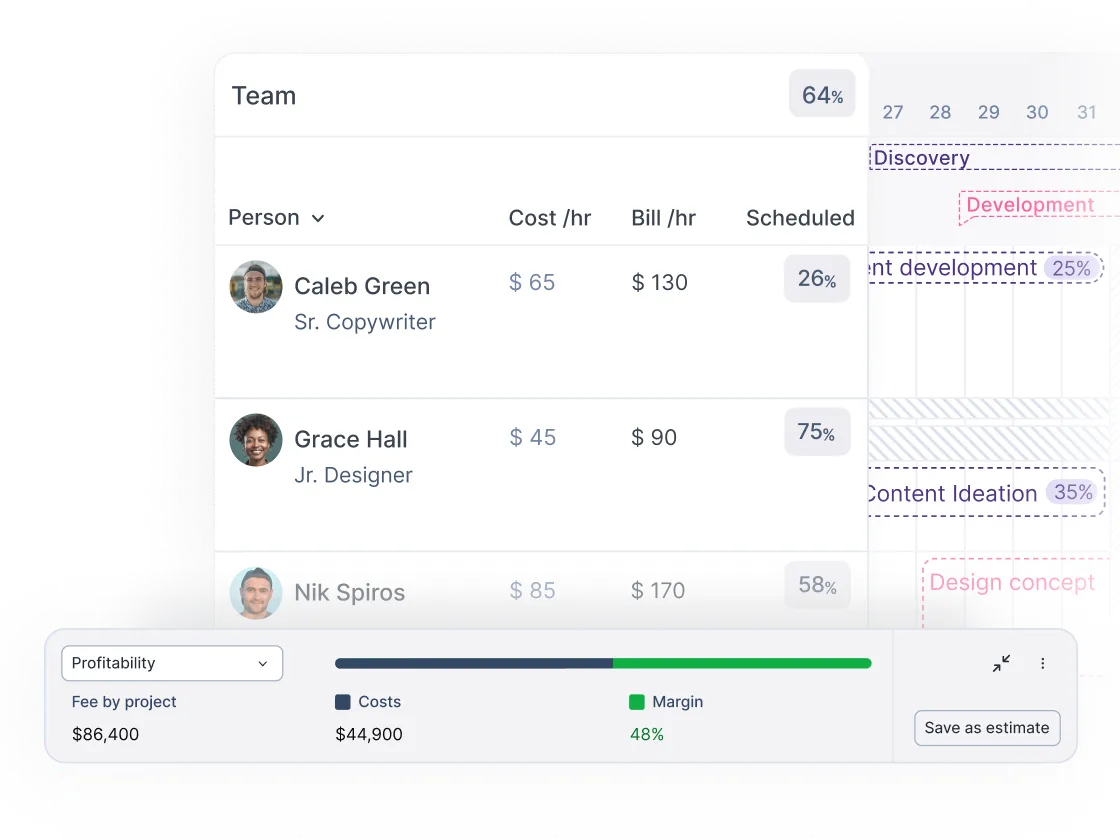
So put them in Float: build a baseline for each project’s budget, phases, and timelines, and use AI-assisted staffing to match the right people to each.
Catch delivery drift while you can still fix it
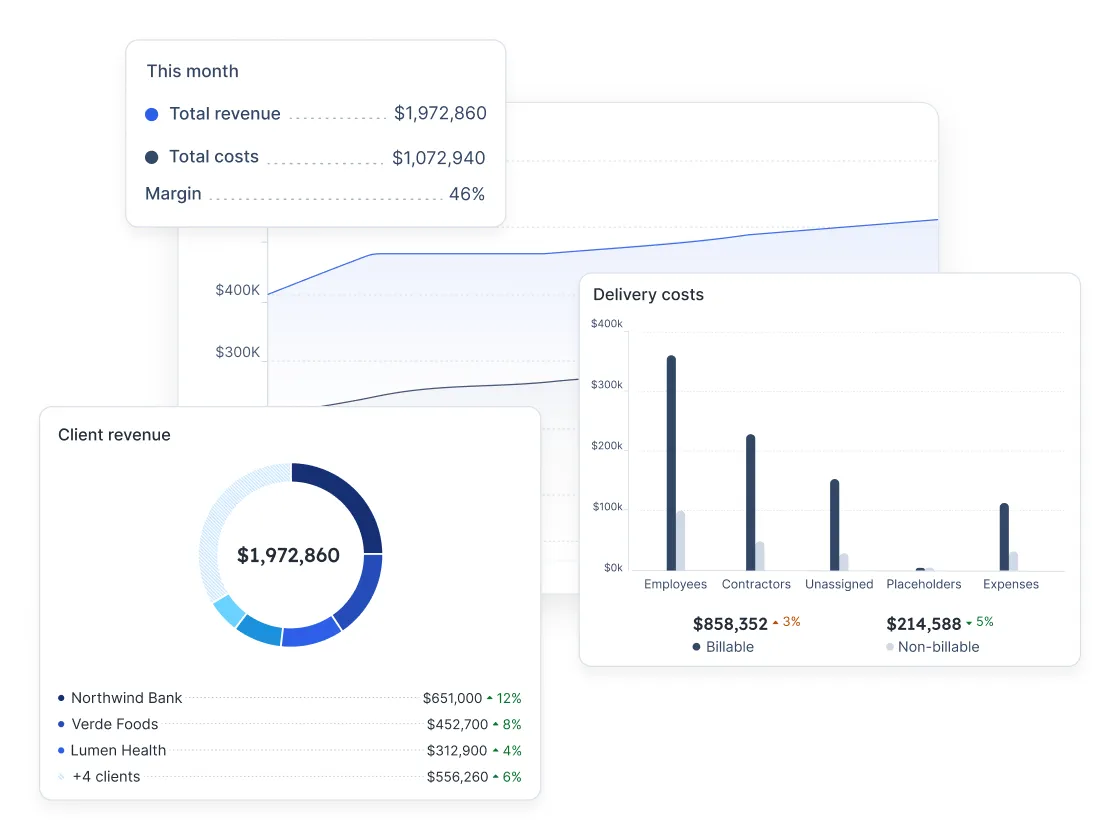
Your profitability relies on catching budget leaks early. Get the reporting depth you need to track your agency health in real time: target vs. actual utilization, budget burn, and project margins.
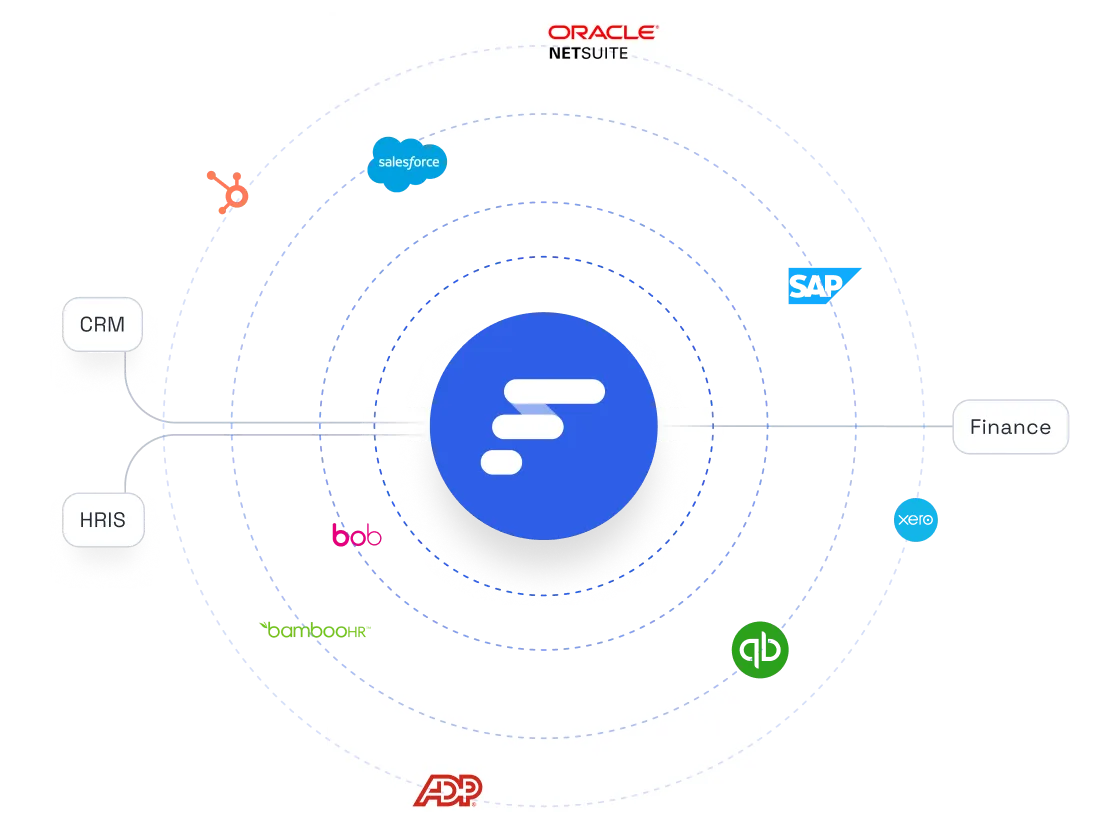
A system that fits with your existing stack
Float integrates and works alongside your HRIS, CRM, and Finance tools to give you the full picture of who’s doing what, when, across every project. In real time.

Chosen by the best to get resourcing right
See how teams like yours make people‑first, profit‑minded decisions every day with Float.




Your frequently asked questions, answered
Spreadsheets tend to break down (or at least make your life harder) once you pass 50 people as they rely on manual updates, and go out of date every time someone takes leave or deadline shifts. Float updates capacity, time off, and project budgets in real time across the entire agency; this removes version control headaches and gives Finance and Ops live margin visibility without hours of manual reporting.
PS: check out this Float vs. spreadsheets comparison for a more in-depth walkthrough.
Yes. Float is built for this exact scenario: multi-disciplinary teams scaling from 50 to 500+ people. You can filter your schedule by department, role, skill set, or location, manage contractors alongside full-time staff, and factor in public holidays and time off automatically—meaning you get an accurate view of true capacity across the entire agency.
Float lets you set a financial baseline for every project, including budgets, phases, bill and cost rates. As work happens, you can compare scheduled hours against actual logged time in real time; instead of finding out that a project went over budget at the end of the month, you spot margin drift early enough to adjust staffing or scope (or both).
Yes. You can add tentative projects and placeholder roles to model upcoming demand from your CRM pipeline. This shows you whether you have the internal bench to take on new work, or when you need to bring in freelancers, before a contract is even signed.
No: Float works alongside the stack you already run. Keep managing tasks in tools like Jira, Asana, or Monday, tracking deals in HubSpot or Salesforce, and running payroll in your HRIS. Float connects to them to act as your single source of truth for capacity, utilization, and project margins, without forcing your team to change or migrate their daily workflows.
Most mid-market agencies get up and running in under a month (usually just a couple of weeks). Because Float is fast, visual, and designed around how agency leads actually plan, with drag-and-drop scheduling, bulk edits, and custom access roles, teams adopt it quickly without needing heavy admin overhead.


