Resource management software gives Ops and Delivery leaders a live operational layer across people, projects, and costs. The right tool lets you staff work confidently, track delivery as it happens, and protect margins from the start.
In professional services, your people are the business. Every resourcing decision you make—who works on what, at what cost, for how long—either builds or erodes your margins. <highlight>But most teams are making those decisions without the full picture</highlight>: scheduling lives in one place, time tracking in another, financials somewhere else, people’s skills in a fourth place. By the time a picture comes together, it’s already out of date.
If you’re looking to better allocate, scope, and report on client work, the shortlist of resource management software below will help you understand:
- What key features matter most in modern resource management software
- Which tools are best suited to different team sizes and operating models
- How pricing compares across tools
[fs-toc-omit]The 11 best resource management software and tools in 2026
For this overview, we evaluated 11 tools based on how well they support planning-led decision-making, including resource planning, scheduling, forecasting, time tracking, reporting, and security & governance. We grouped them as follows:
1. Best-of-breed resource management software
Purpose-built tools that give you a clear, real-time view of your team’s capacity, utilization, and costs. With the full picture in one place, you can make confident decisions about who should work on what—and what that work will cost.
Scroll down to → Float, Runn, Resource Guru, Harvest Forecast, Toggl Plan
2. Enterprise work management platforms
These tools bundle resource management into broader (and often more complex) work management or PSA-style platforms. Because resourcing isn’t their primary focus, the operational picture tends to be incomplete: planning workflows are typically more rigid and admin-heavy, and the data your team needs is spread across modules.
Scroll down to → RM by Smartsheet, Kantata, Wrike
3. All-in-one project management software
Built for task execution rather than people planning. These tools track what’s happening now, but don’t give the forward-looking view of capacity, utilization, or costs that delivery teams need to staff and price work confidently.
Scroll down to → Asana, Monday.com, ClickUp
⚠️ Note: product details, pricing, and reviews change over time, so we review and update this article twice a year. If you spot anything that looks off, let us know.
➡️ Bonus tip: you can use one of our customizable resource planning templates to keep your plans in order while you evaluate the right tool for your team.
<hr>
1. Float.com
🏢 Founded in: 2011
🎯 Primary software category: Resource management
🏆 Ratings: G2: 4.3 (~2000 reviews) Capterra: 4.5 (1,600+ reviews)
Float.com (hello 👋) is the world’s #1 resource management software for professional services and in-house delivery teams. If your VP of Ops is focused on utilization, your CFO needs accurate forecasts, and your resource managers are stuck in spreadsheets, Float may be the right solution for you.
Founded in 2011, Float pioneered dedicated resource management software long before it became a category. Today, our remote-first team of 50+ supports over 4,500 customers and 2 million users worldwide.
PS: we put ourselves in position #1 because we’re literally #1 in G2 for Resource Management, and we’ve held this position for seven seasons in a row, up to and including Summer 2026.
<hr>
Resource management features in Float: overview
Float focuses on the high level of capacity planning and project scheduling, rather than the micro details of task management. Instead of replacing your existing CRM, project tool, and finance systems, it works alongside and complements them.
With Float, Ops and Delivery leaders can:
Always know who’s available and what’s coming next
See who’s working on what at a glance, catch capacity issues early, and reallocate resources when plans change. Your people’s availability, roles, skills, and rates live in Float and update in real time.
Scope accurately and adjust quickly
Set a baseline for every project (price, budget, roles, timeline) before work begins. When something changes, compare your adjusted scope against the baseline and adapt with confidence instead of guesswork. AI-assisted staffing helps you find the right person, not just whoever’s free.
Stay on top of delivery performance
Get a live view of how delivery is going, with the reporting depth to understand what’s driving it. From utilization to actuals, margin, and budget burn: if things drift from the plan, you see it as it happens.
Track time without chasing it
Pre-fill timesheets from scheduled work so actuals are accurate and on time, without asking your team to do extra admin.
Take a 3-min guided tour by our teammate, Alex:
Recent product updates
We’re constantly evolving to help professional services teams run leaner and smarter operations. Our latest releases connect people and financial data into a live delivery picture:
- Project finance dashboard (April 2026): identify delivery risk before it hits your bottom line, with real-time visibility into budget burn, margins, and actuals
- People operations dashboard (April 2026): keep delivery on track by balancing demand and capacity across your team
- Smart assign (March 2026): uses machine learning to find the closest role fit, then layers in availability so you get a staffing recommendation you can act on (as opposed to a long list of availabilities to manually filter through)
- Finance & estimation (Q4-2025)Float’s finance & estimation features let you price accurately, protect margins, and deliver profitable projects every time.
PS: you can keep track of recent updates on our What’s new page.
Float is right for you if you are:
- Professional service teams of 100 to 1000+ people
- Tech-savvy teams who prefer modern tools that increase efficiency and enable agile processes
- Agencies and consulting firms in Advertising & Marketing, Custom Software & IT, Management consulting, Multimedia & Graphic Design, Architecture, Engineering
- In-house professional service teams, e.g., creative services, production, or L&D teams
We will not be right pick for:
- Freelancers
- Individual consultants
- Roster or shift work teams
<sme-box>
<sme-color="pink">
<sme-image>

</sme-image>
<sme-author>
Comfort Agemo
</sme-author>
<sme-position>
Sr Capacity and Freelance Manager at Scholz & Friends
</sme-position>
<sme-quotes>
Once a week, we have a virtual capacity planning meeting with account managers and creative directors, in which we go through projects in Float to see team workloads and availability. Float enables us to answer important questions like: Is this project properly planned? How much time can we allocate to tentative projects without blocking confirmed projects? Can we predict how much work is coming in?
</sme-quotes>
</sme-box>
Float pricing
- 1. Starter. $7 per person per month, billed annually. Essential for basic resource scheduling, with unlimited projects and powerful reporting.
- 2. Pro. $12 per person per month, billed annually. Everything in Starter, plus built-in time tracking, single sign on (SSO), and workflow features designed to scale.
- 3. Enterprise. A custom plan that includes everything in Pro and is designed for larger organizations with heavier compliance and support needs.
- Free trial: Yes, 30 days.
🔥 Learn more about our pricing plans here.
<cta-box>
<image-color="yellow">
Try the #1 tool trusted by 4,500+ of the world’s top teams
Want to see why teams like Instrument, Atlassian, Ogilvy, and Deloitte keep choosing Float for their resource management? Kick off a free 30-day trial and find out.
<cta-button>Try for free</cta-button>
</cta-box>
<hr>
2. Runn
🏢 Founded in: 2018
🎯 Primary software category: Resource management
🏆 Ratings: G2: 4.5 (1 review) Capterra: 4.8 (30 reviews)
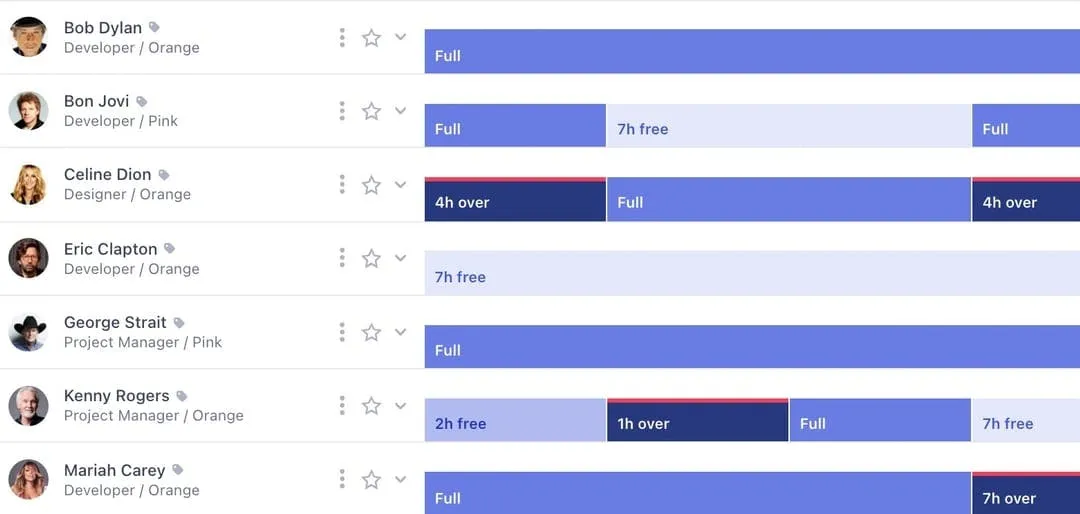
Runn is a purpose-built resource management tool for professional teams. Founded in 2018, the company hails from New Zealand (Aotearoa) and has a fully remote team. Runn is geared towards project managers and senior leadership who want to forward plan their staffing (including hiring) needs in project work, and has more than 15,000 users according to their site.
Their aim is to help project teams better run their processes with a focus on capacity planning and solving staffing challenges. In their 2021 seed capital raise, co-founder and CEO Tim Copeland said that Runn was seeking to address problems for project managers to plan, track, and forecast their staffing capability and resource capacity.
Much of Runn’s recent product enhancements have been around improving their capacity management features, including partial-day time off scheduling, a guided placeholder workflow for unfilled roles, expanded reporting (such as manager-level fields), and continued development of its Jira integration.
What resource management features does Runn offer?
Designed for senior leadership and project managers, Runn’s features focus on capacity planning at a high level.
- Setting up your people in Runn is geared towards standardizing overall company roles and associated rate cards. Runn checks all of the boxes for essential resource management functions and offers direct integrations with time-tracking tools like Clockify and Harvest.
- Resource management functionality includes drag-and-drop scheduling, role- and skill-based search, capacity heatmaps, and placeholders to model tentative or unconfirmed work. The Guided Placeholder Workflow (released December 2025) simplifies adding placeholders and helps find the best team members for unfilled roles.
- Limited scenario planning: while Runn positions itself as offering forecasting, this is primarily achieved through placeholders, tentative bookings, and utilization indicators on a single forward-looking schedule, rather than true scenario-based modeling to compare multiple potential futures or outcomes.
- As it’s still a relatively young tool (compared to Float and Resource Guru, below), Runn’s feature set remains intentionally centralized and availability-driven, with planning decisions typically made by a small number of operators rather than distributed across teams. For example, its Jira integration is designed to sync high-level project and team information rather than support detailed delivery workflows.
Who is Runn best suited for?
- Small teams with one to two decision-makers for project resourcing
- Small teams that are growing and need to make future hiring decisions
- ≤5 people teams who want a free plan with access to core scheduling and capacity planning features
Not suited for:
- Larger organizations, eg. 30+ people teams with project leads and department managers
- Teams who want their resource management tool to align the whole team
Runn pricing
- 1. Starter. $10 per person/month. Best for small teams with basic resourcing needs.
- 2. Professional. $14 per person/month. All features with additional services like notifications, 5x custom fields, and advanced filters.
- 3. Enterprise. Custom pricing that includes premium features like premium support, bespoke implementation services, full API access.
- Free trial: yes
<hr>
3. Resource Guru
🏢 Founded in: 2011
🎯 Primary software category: Resource management
🏆 Ratings: G2: 4.6 (420+ reviews) Capterra: 4.7 (500+ reviews)
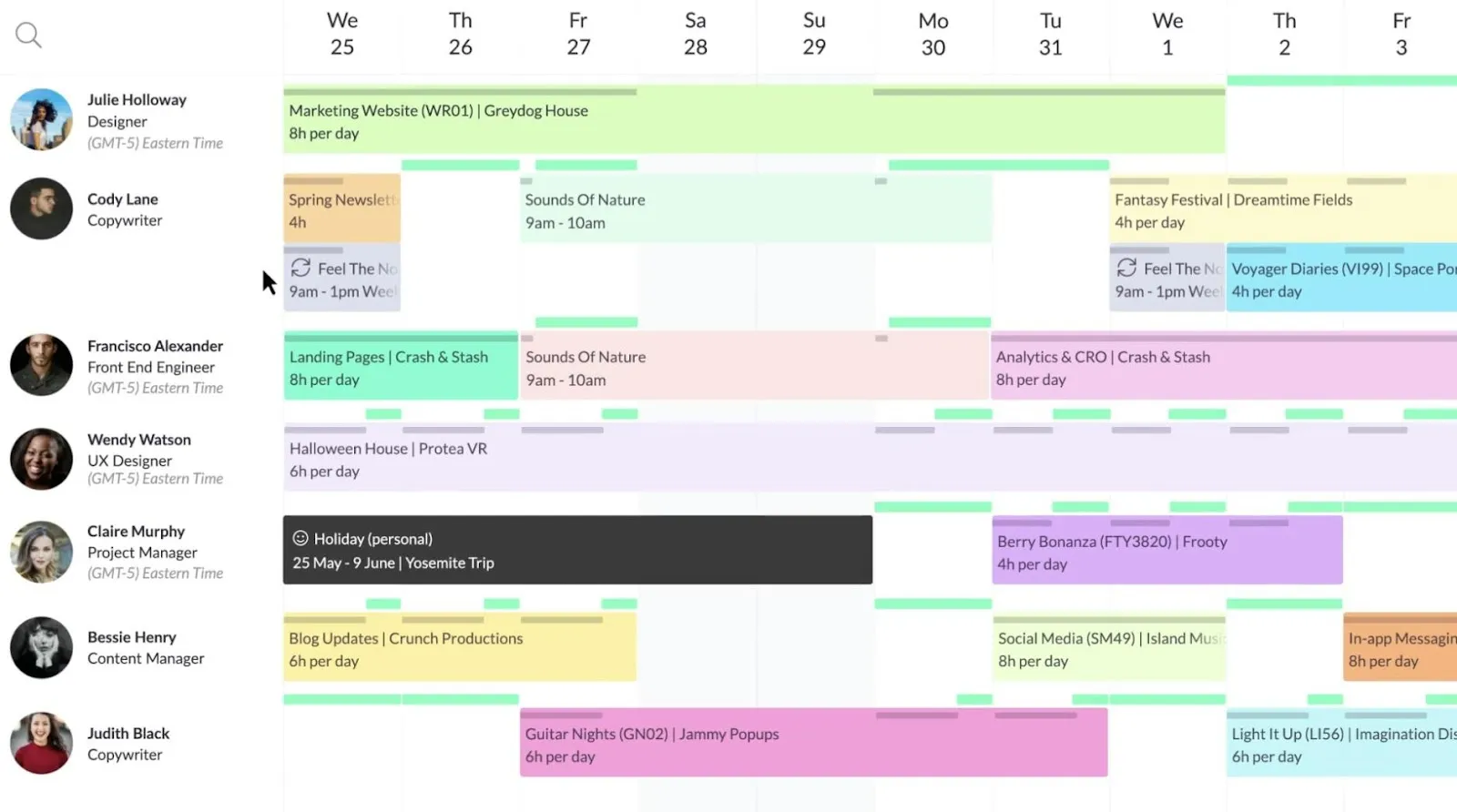
Resource Guru, alongside Float, was one of the first purpose-built resource management tools to enter the SaaS industry in 2011. Today, they are a remote-first team of 40+ people and offer one of the most affordable plans for basic resource planning—with different seat pricing for scheduling human and non-human resources (think: tools and/or meeting rooms). It also does a good job combining capacity planning and leave management in a simple interface.
If you’re a small team that needs a simple scheduling solution, Resource Guru checks most boxes.
A downside of the software is that their entry plan still limits access to advanced reporting. Downloadable reports are available on their mid-tier Blackbelt plan, while in-app, interactive reporting and deeper insights are reserved for the premium Master plan. Yet, planning with the full picture is important, so reporting shouldn’t be negotiable in resource management software—as knowing the health of your people and projects is essential to great teams.
What resource management functionality does Resource Guru offer?
Resource Guru offers all of the critical features needed for capacity management, scheduling, and standard availability management, such as calendar sync integrations and vacation scheduling, along with placeholders, custom fields, and utilization heatmaps to quickly identify over- and under-allocation
- Its main interface is designed for a “booking” mindset so it’s easy to see all of your human and non-human resources in a left-hand sidebar, and visual cues on the schedule for when there’s a booking clash or someone is overbooked. This booking-first model works well for shared assets and straightforward people scheduling, but places less emphasis on skills, rates, or outcome-based planning.
- Feature support for organizational hierarchy comes with the option to set “approvers” for booking requests. Note: setting up organizational hierarchies for departments can only be done by using custom tags, which can become limiting once your team grows beyond 20 people.
- Reporting in Resource Guru is helpful to quickly see your team’s utilization rates and whether scheduled work is on budget—although full in-app reporting is limited to the premium plan. Plus, the reporting available in the app is limited to categorized totals (such as total scheduled hours, billable versus non-billable hours, and unscheduled hours), making it better suited to monitoring allocation than driving proactive, planning-led decisions.
Who is Resource Guru best suited for?
- Small agency teams
- Teams that need non-human resource bookings
- Teams that need basic scheduling only, with light reporting needs
Not suited for:
- 20+ people professional service teams
- Teams with multiple departments
- Teams that need to track budget spend or run advanced scenario planning
Resource Guru pricing
- 1. Grasshopper. $4.16 per person per month. The basic plan includes resource booking, absence management, and project views—but does not include reports. You can however add non-human resources (eg. meeting rooms, vehicles, and bookable equipment) for $2.08 each
- 2. Blackbelt. $6.65 per person per month. Everything in Grasshopper plus reports.Non-human resources at $3.33 each.
- 3. Master. $10 per person per month. This plan adds SSO, data imports & phone support. Other resources are $5 each.
- Free trial: Yes, 30 days.
<hr>
4. Forecast (by Harvest)
🏢 Founded in: 2006
🎯 Primary software category: Resource management, although its core product Harvest is in time tracking
🏆 Ratings: G2: 4.1 (40+ reviews) Capterra: 4.3 (30 reviews)
Harvest has been a trusted time-tracking tool since 2006, adding Forecast for work planning in 2014. As of late 2025, Harvest is owned by Bending Spoons, though the product and roadmap for Forecast have remained largely unchanged... for now.
Harvest is still the primary product of the company: a precise time-tracking tool with invoicing features that has been a long-time favorite among the freelancer and independent agency community.
Although Harvest Forecast requires an additional subscription cost and separate log in, it’s designed as a complementary product. The direct integration allows for synced data between the tools. In recent years, Harvest has increasingly positioned Forecast as a lightweight planning companion to time tracking, rather than a standalone solution, reinforcing its role as a secondary tool rather than a core planning system.
What resource management features does Harvest Forecast offer?
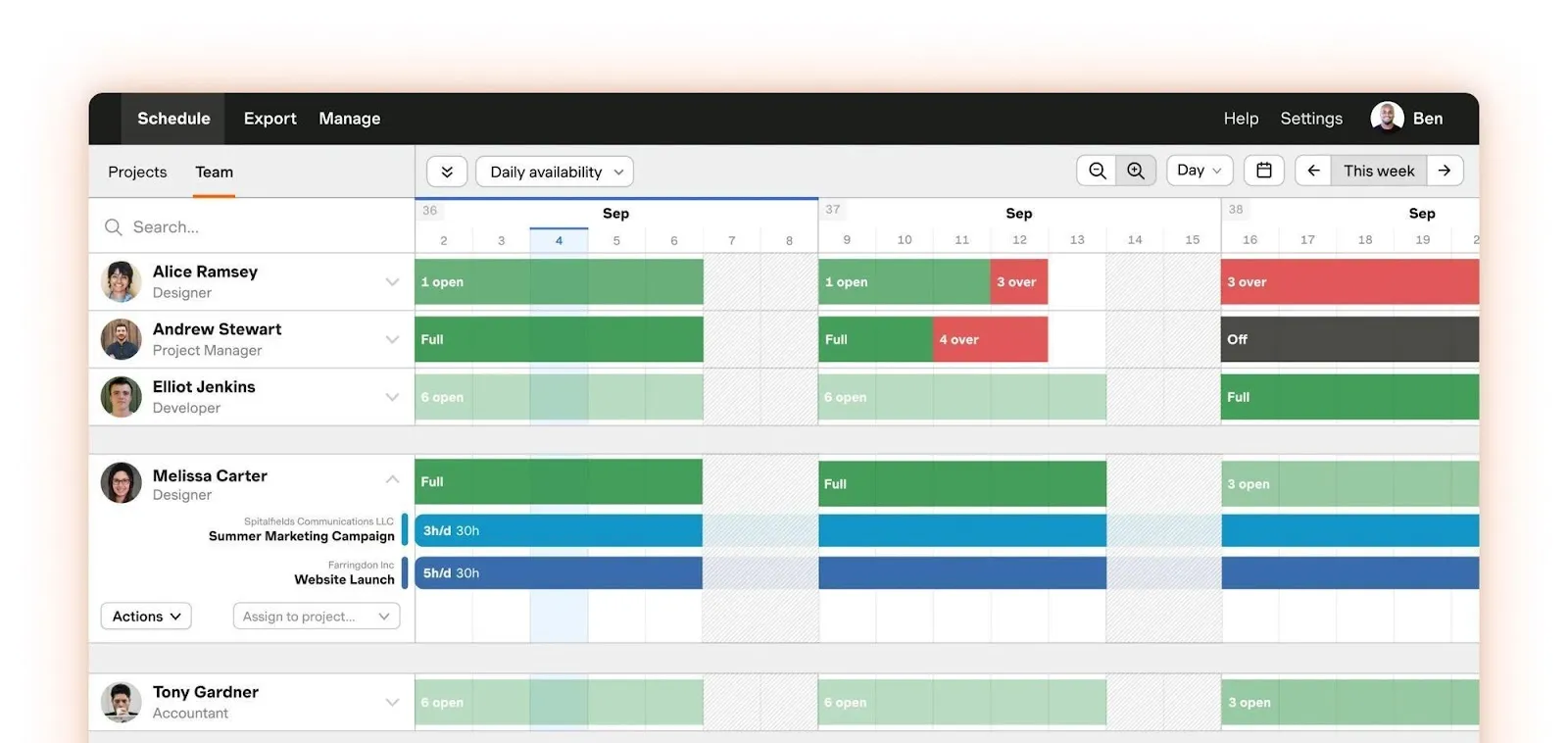
- Harvest Forecast provides basic resource management features for tracking people resources and scheduling projects at a high level. It has a traditional resource management software interface that enables teams to add projects, assign hours, and account for scheduled time off.
- The software is limited when it comes to the flexibility, people detail, and planning nuance most professional teams require. Much of the setup relies on manual inputs and governance, with limited support for skills, rates, or scenario-based forecasting.
- Planning and financials split across tools: staffing and scheduling live in Forecast, while budgets, actuals, and margin tracking sit in Harvest—resulting in a less connected planning workflow and higher cost for teams that want a single, end-to-end view.
Who is Harvest Forecast best suited for?
- Freelancers
- Small agencies where planning and scheduling are handled by a single owner or manager
- Teams that primarily need time tracking with light forward planning
Not suited for:
- Professional teams with multiple departments and managers
- 30+ people organizations
- Teams that need planning-led margin control or long-term forecasting
Harvest Forecast pricing
Harvest Harvest Forecast costs $5 per person per month when billed annually ($6.25 month-to-month) and must be used alongside Harvest. It can be added to Harvest, which has the following three plans:
- 1. Free. For one seat and two projects max.
- 2. Pro. $11 per seat/month, for unlimited seats and projects.
- 3. Premium. $14 per seat/month, including custom onboarding for 50+ seats.
- Free trial: Yes, 30 days.
<hr>
5. Toggl Plan/Focus
🏢 Founded in: 2006
🎯 Primary software category: Project planning
🏆 Ratings: G2: 4.2 (20+ reviews) Capterra: 4.6 (110+ reviews)

Toggl was founded as a time tracking tool back in the early 2000s, after its founders had experienced firsthand the challenges of running an agency and tracking billable time on client work.
They historically offered three products—Plan for project tasks and timelines, Track for time tracking, and Hire for skills-based hiring plans. From late 2025, Toggl started shifting its positioning away from Plan as a standalone product, and toward a broader planning experience under the “Toggl Focus” umbrella. As of January 2026, Toggl Plan is no longer actively marketed to new customers.
What resource management solutions does Toggl Plan/Focus offer?
- Integrated time tracking. Toggl Focus combines project planning with Toggl’s time‑tracking engine, so planned hours automatically become time entries. Users can track time manually, via a timer, through calendar entries or using Pomodoro timers.
- Capacity view quickly shows who is over or under capacity, helping rebalance workloads quickly.
- Focus mode. A built‑in countdown timer encourages uninterrupted work and surfaces upcoming tasks to keep teams on track.
Who is Toggl best suited for?
- Teams that need precise time tracking
- Freelancers
- Small agencies or consultancies
Not suited for:
- Professional teams who need a resource scheduling solution
- Teams sharing resources on multiple projects
- Teams with organizational hierarchy, e.g., department leads and managers
Toggl Plan pricing
Toggl Plan pricing now applies primarily to existing customers. For new customers, planning functionality is bundled into broader Toggl offerings. Historically, plans included:
- 1. Capacity. $5 per user per month. Covers task estimates, time tracking, and availability overview
- 2. Starter. $8 per user per month. Visual workload management, team timelines, and more for small teams that want basic work management and resource planning.
- 3. Premium. $13.5 per user per month. Includes time off management, priority support, and more.
- Free trial: Yes, 14 days.
<hr>
6. RM by Smartsheet
🏢 Founded in: 2005
🎯 Primary software category: Work management
🏆 Ratings: G2: 4 (130+ reviews) Capterra: 4.2 (60+ reviews)
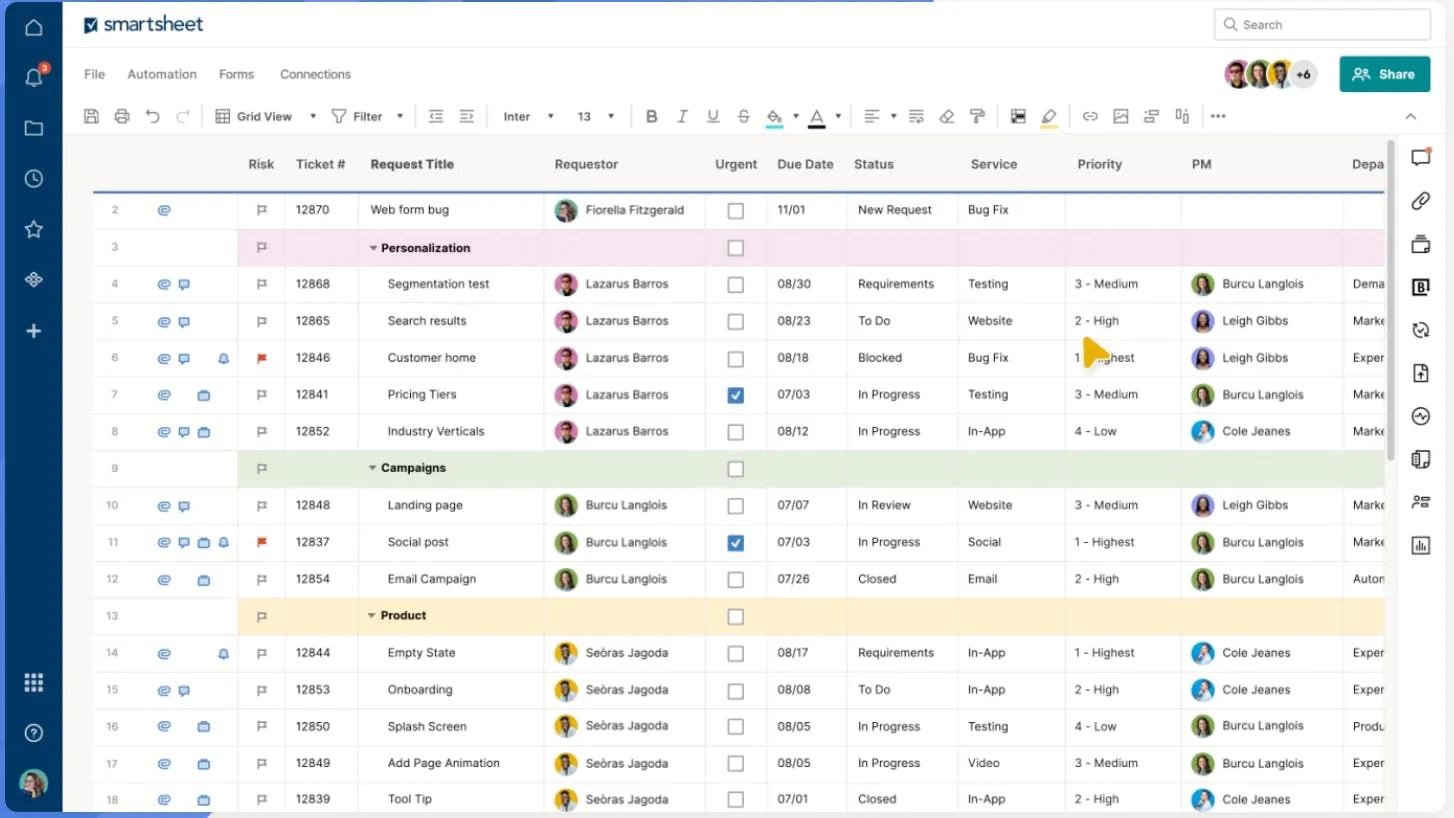
Smartsheet is a complete work management platform with millions of users, often used by large enterprises. It didn’t start off with resource management capabilities, but added them in after the acquisition of 10,000ft in 2019. Currently, they offer resource management as a premium add-on branded as “Resource Management by Smartsheet.”
Since it offers dedicated resource management features, Smartsheet differs from other all-in-one tools you will see below (eg. Monday.com or ClickUp): their solution is more geared towards senior management and leadership who need centralized oversight. It also supports percentage-based planning, role definitions, and utilization forecasting, with an obvious emphasis on data completeness and governance rather than speed or flexibility.
What resource management solutions does RM by Smartsheet offer?
- Its people management function serves as a resource database, almost like an intranet for your projects. It includes project planning inputs like role, department, rates, and availability and can capture granular details (eg. individual phone numbers). While powerful, this depth comes at a cost: making changes to allocations or plans can be slow, and collaboration is limited—so if you want this much information, make sure that you also have a good governance practice to upkeep it. When it comes to resource planning, Smartsheet isn’t renowned for being user-friendly to make edits and reallocate work. Its UI limitations are one of the reasons why it’s not that suitable for modern, agile teams, especially where resourcing decisions need to be made quickly or collaboratively.
- Smartsheet’s dedicated resource management product is great for the earlier stages of project planning, with a range of features to support high-level resource planning and team scheduling. These include a single view of your team’s capacity and resource allocation, scenario planning, placeholders, and utilization forecasting.
Who is Smartsheet best suited for?
- Large corporate teams who need a one-stop shop for work management
- Organizations with formal planning cycles and strong governance
- Teams who want to project plan only, and don’t need user-friendly resource management
Not suited for:
- Teams who want a resource management tool that’s user friendly across the organization
- Teams who prioritize fast workflows and need to make quick changes to schedules
- Agile teams who prefer modern tools
An independent review by project management expert Sarah M. Hoban quotes Smartsheet as being better suited for “MBA types who think in Excel.”
Smartsheet pricing
Resource Management by Smartsheet requires an Advanced Work Management plan with custom pricing.
<hr>
7. Kantata
🏢 Founded in: 2008 (as Mavenlink)
🎯 Primary software category: Resource management
🏆 Ratings: G2: 4.2 (1,460+ reviews) Capterra: 4.2 (600+ reviews)
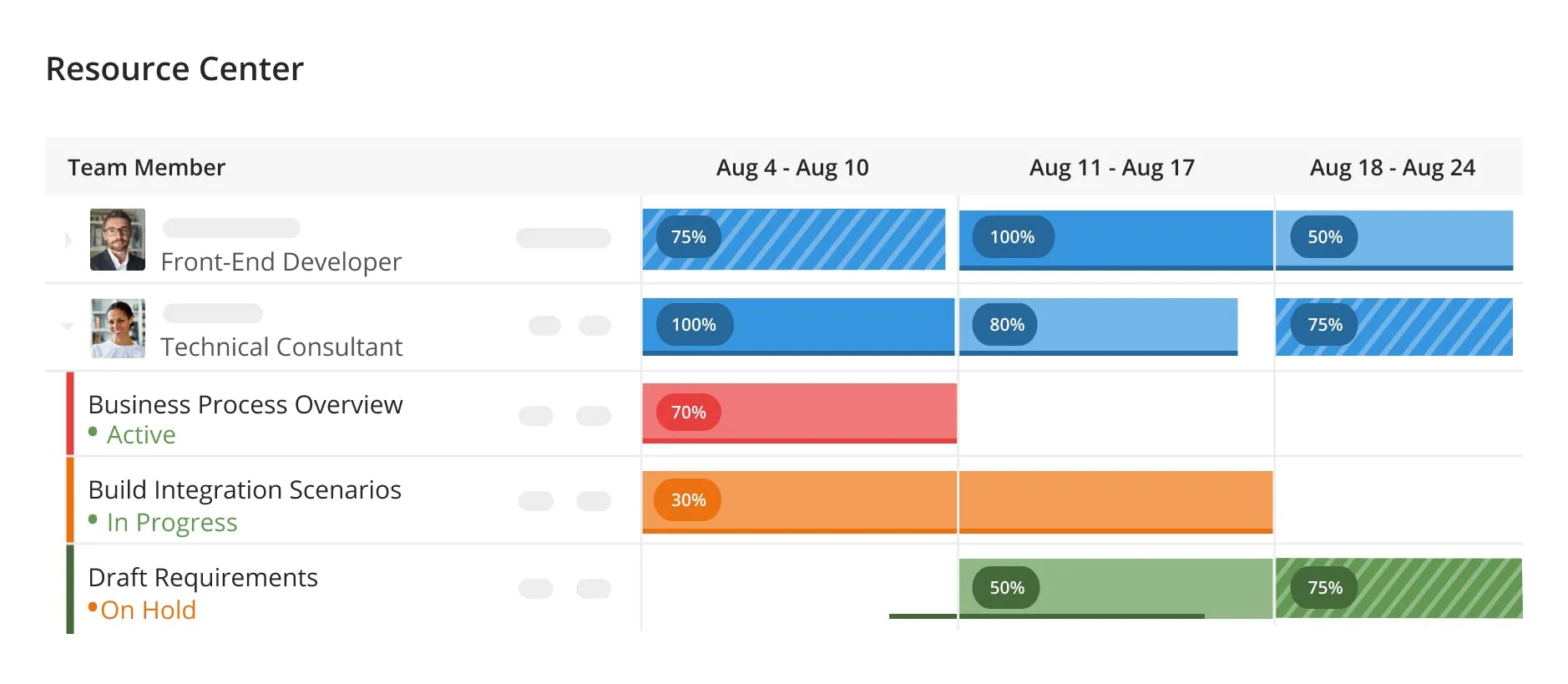
Kantata PS Cloud, formerly Mavenlink + Kimble, is a professional services automation (PSA) platform that combines finance, project, and resource management into a single solution for high-level decision-making. Its dedicated resource management features assist senior management in planning projects and staffing. According to their website, they serve over 2,000 professional services organizations.
Kantata offers two core products, each of which an all-in-one bundled solutions for resource management:
- Kantata SX, which brings projects, people, and financials together in a Salesforce-native PSA
- Kantata OX, built on an open API for new customers
Although it may be tempting to opt for a platform that combines multiple services, remember to weigh the benefits against the potential complexity of using tools like Kantata. Consider how frequently you’ll use different features and how much time and effort it will take to get the job done—your decision should be based on finding the right balance between functionality and usability.
What resource management features does Kantata offer?
- While Kantata excels in breadth, it can be complex to use for scheduling and allocation. The interface is designed for senior business leaders and PMOs, and is less intuitive for modern and agile tech-first teams. Basic tasks, such as creating projects and allocating work, can take quite a few clicks. Adoption and day-to-day usage can be a challenge without formal training and change management.
- By bringing finance, project, and resource management tools together, Kantata provides a comprehensive view of your organization’s project data.
- Kantata’s integrated resource management solution has all of the core features for capacity management and work planning, along with project planning capabilities including revenue forecasting, margin tracking, and utilization-based financial reporting.
Who is Kantata best suited for?
- Large orgs and teams that need fast, flexible planning
- Organizations with formal planning cycles and strong governance
Not suited for:
- Creative industries
- Remote work environments
- Modern teams who prefer lightweight, user-friendly tools
Kantata pricing
Pricing is not publicly available and requires a sales-led process, including sharing your industry, company size, and contact details with a Kantata rep.
Free trial: Yes, 14 days after signup.
<hr>
8. Wrike
🏢 Founded in: 2006
🎯 Primary software category: Work management
🏆 Ratings: G2: 4.2 (4,400+ reviews) Capterra: 4.4 (2800+ reviews)
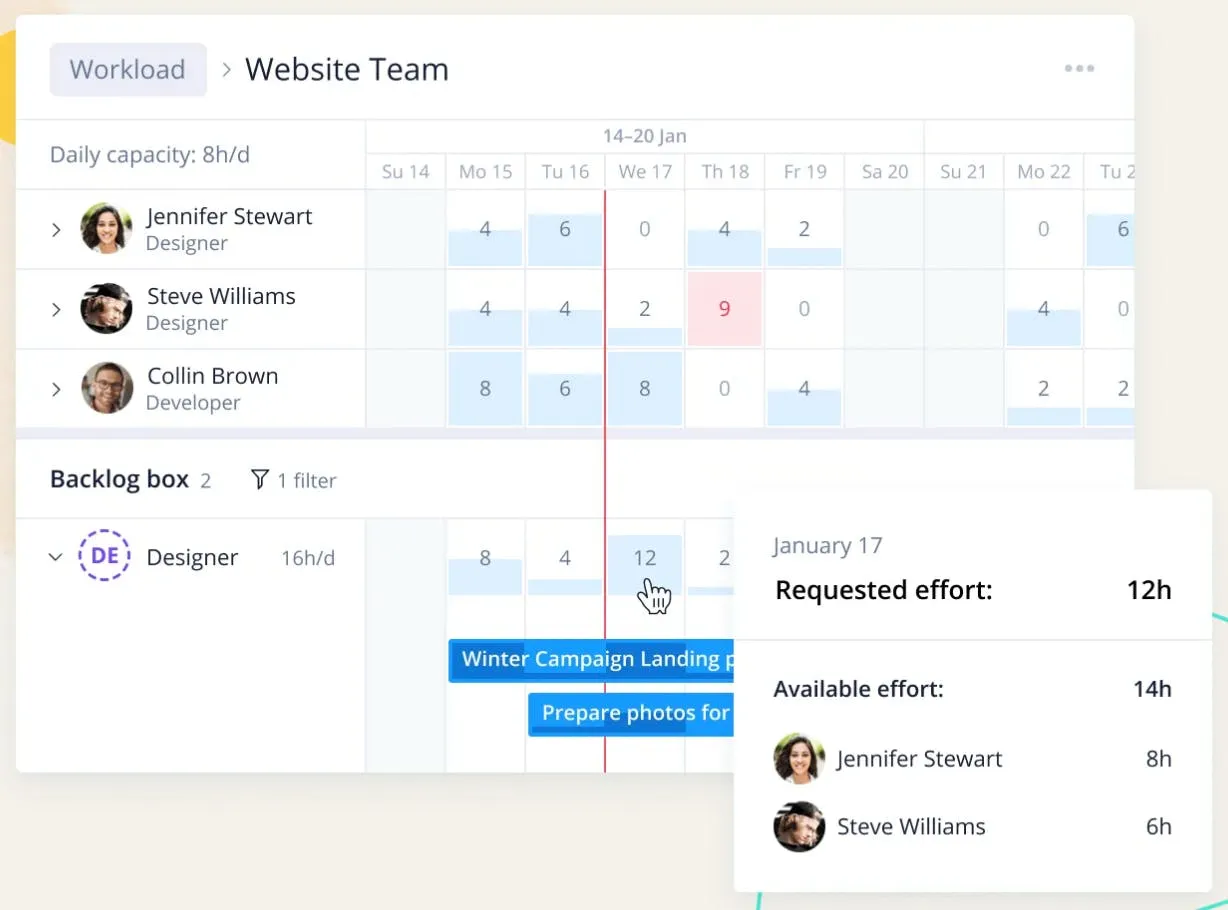
Wrike is a work management platform founded in 2006 as a collaboration solution for project work management. In 2021, Wrike was acquired by Citrix for $2.3 billion, though it later returned to operating as a standalone company with independent leadership.
Wrike is primarily a collaborative project management solution, but it also offers resource management features for in-house creative and marketing teams. Resource management is offered under Wrike’s Business plan and above.
What resource management solutions does Wrike offer?
- Work management features (like default role rates and billable rates) make it easier to scenario-plan project work, with all actual work assigned in the schedule. However, capacity settings and time-off controls remain admin-heavy and centralized.
- Wrike’s resource management combines workload allocation and timesheets with project management into one feature-bundled platform.
- Advanced features such as resource bookings, budgeting, and utilization dashboards are largely gated behind Enterprise and Pinnacle plans and geared towards teams with high levels of governance and senior management. For example, only Admins and the Account Owner have edit rights to set up available capacity and import time off.
Who is Wrike best suited for?
- In-house creative andmarketing teams up to 200 people
- Teams that want work and project management first, resource planning second
Not suited for:
- In-house service units
- Teams without external clients, e.g., in-house service units
- Teams that need deep, dedicated resource management
Wrike pricing
- 1. Free. For small teams that want intelligent task management.
- 2. Team. $10 per user per month. For growing teams of up to 15 people with AI essentials, interactive Gantt charts, and shareable dashboards
- 3. Business. $25 per user per month. Includes AI Elite features, work templates, resource and capacity planningThis plan is limited to 200 users, after which you’ll need to speak to their Sales team about an enterprise plan.
- 4. Enterprise & Pinnacle. Plans for large teams for unlimited users, enhanced governance, etc.
- Free trial: Yes, 14 days.
<hr>
9. Asana
🏢 Founded in: 2008
🎯 Primary software category: Project management
🏆 Ratings: G2: 4.4 (12,800+ reviews) Capterra: 4.5 (13,000+ reviews)
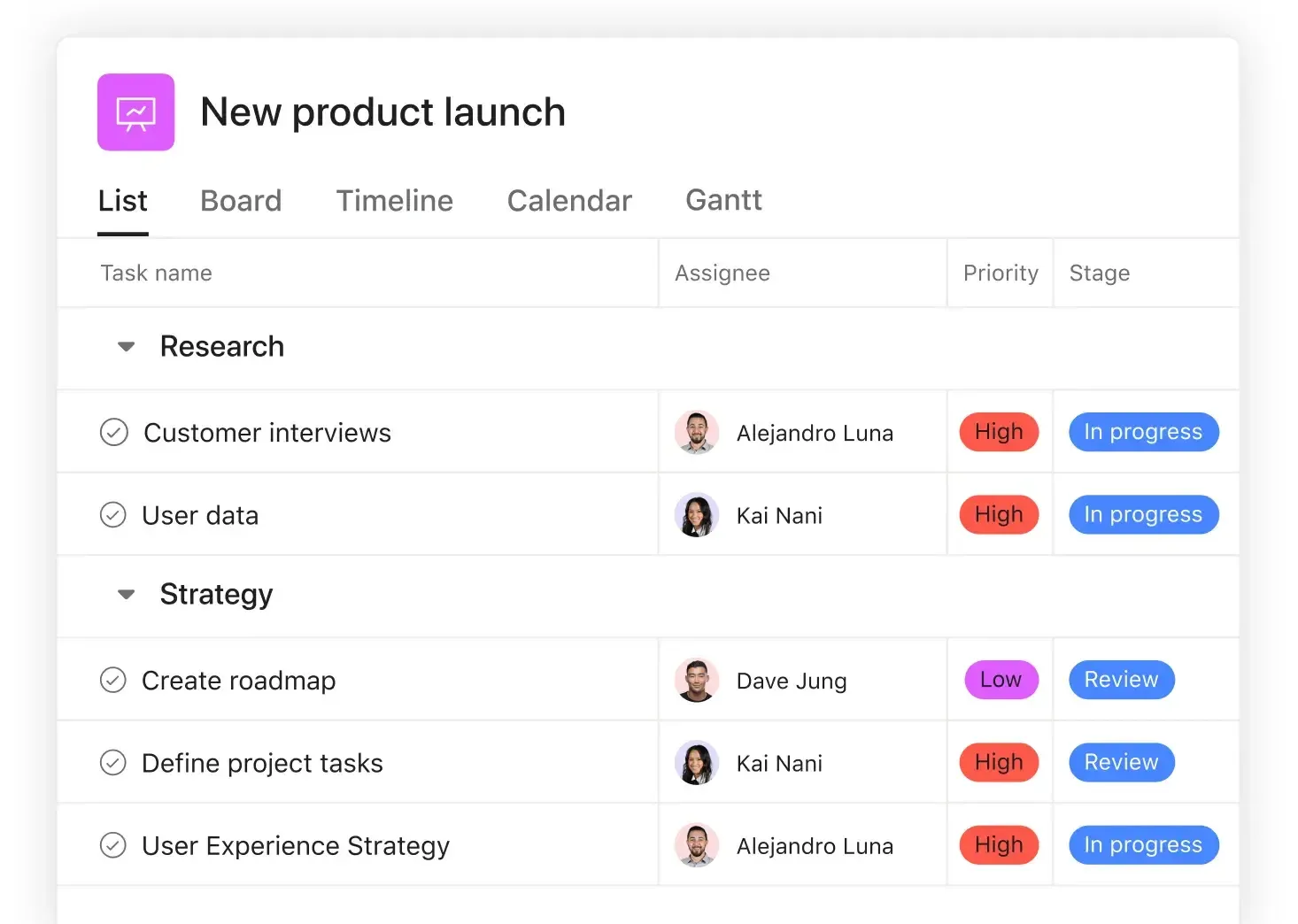
Asana is a solid choice for project management (we used it at Float before switching to Linear 😉), but it’s not focused on resource management. While they offer a workload feature on their Advanced and Enterprise plans, it provides only a rough estimate of team capacity based on task count and duration, rather than true availability, cost, or utilization modeling.
Manually inputting "task effort" to estimate capacity based on hours or points may work for small teams, but it doesn’t scale well for complex planning or forecasting. And while Asana has recently invested heavily in AI (AI Studio and AI Teammates), these enhancements focus on execution and productivity rather than planning capacity or resourcing strategy.
We’re big fans of Asana, but we would recommend it for project management, rather than resource management—which is also why we built an integration between Float and Asana.
<sme-box>
<sme-color="pink">
<sme-image>

</sme-image>
<sme-author>
Jacquie Ford
</sme-author>
<sme-position>
Head of Consumer Operations at News Corp
</sme-position>
<sme-quotes>
We integrate Asana into Float to deliver day-to-day project management with team planning and forecasting. The incredible capacity planning and reporting functionalities of Float are strides ahead of other project management tools—and I’ve used just about all of them. We use Float to manage our sprint allocations and forecast workloads for individuals and teams up to six months in advance across multiple functions. It’s been an absolute game changer in our ability to be truly agile.
</sme-quotes>
</sme-box>
What resource management solutions does Asana offer?
Asana offers several features that support lightweight resource and workload management, primarily at the project and task level:
- Workload view to visualize assigned tasks by person and see over- or under-allocation across projects
- Task-based effort estimation using custom fields (e.g. hours, points)
- Timeline and Gantt views for scheduling work against project dates
- Project portfolios to roll up work across multiple projects and teams
- Dashboards and reporting for high-level visibility into assignments and progress
Who is Asana best suited for?
- Small to mid-sized teams (≈10–75 people) that want visibility into workloads without formal capacity planning
- Internal teams (marketing, product, operations) where utilization and billable capacity are not core business metrics
- Teams that prioritize project execution, coordination, and clarity of ownership over long-range resource forecasting
Not suited for:
- Professional services organizations with 100+ people managing shared resources across many concurrent client projects
- Teams that need forward-looking capacity forecasting, utilization tracking, or delivery confidence
- Organizations that require role-based planning, availability modeling, or scenario planning
Asana pricing
- 1. Personal—Free. Project management for individuals or teams just getting started. Doesn’t include resource management.
- 2. Starter. $10.99 per user per month. Everything in Personal, plus Asana AI Studio, track and plan projects with timelines, Gantt views, milestones, etc.
- 3. Advanced. $24.99 per user per month. For companies that need to manage a portfolio of work and goals across departments. Limited resource management is possible with the “Workload” addition.
- Enterprise and Enterprise+. For companies that need to coordinate and automate complex work across departments, without limits, and need to meet strict compliance requirements.
- Free trial: Yes, 30 days.
<tip>
Resource management vs project management tools
Resource management tools focus on the macro (high-level plans), what resources are allocated to what projects and for how long, and ensure alignment on the investment for a project. Project management tools handle the micro (task lists and details), what needs to be done in the service of an overall goal, and help manage the work and nuances of day-to-day work
At Float, we don’t think you should choose between a resource management tool like ours and a project management tool like Asana (or ClickUp, or Monday.com). It’s not an either/or, and the two can complement each other really well! Float is where resource managers do their project planning and estimating then schedule and allocate resources, whereas project management tools are for project managers who need detailed task lists to help their teams stay laser-focused on processes and execution.
</tip>
10. monday.com
🏢 Founded in: 2012
🎯 Primary software category: Project management
🏆 Ratings: G2: 4.7 (14,000+ reviews) Capterra: 4.6 (5,600+ reviews)
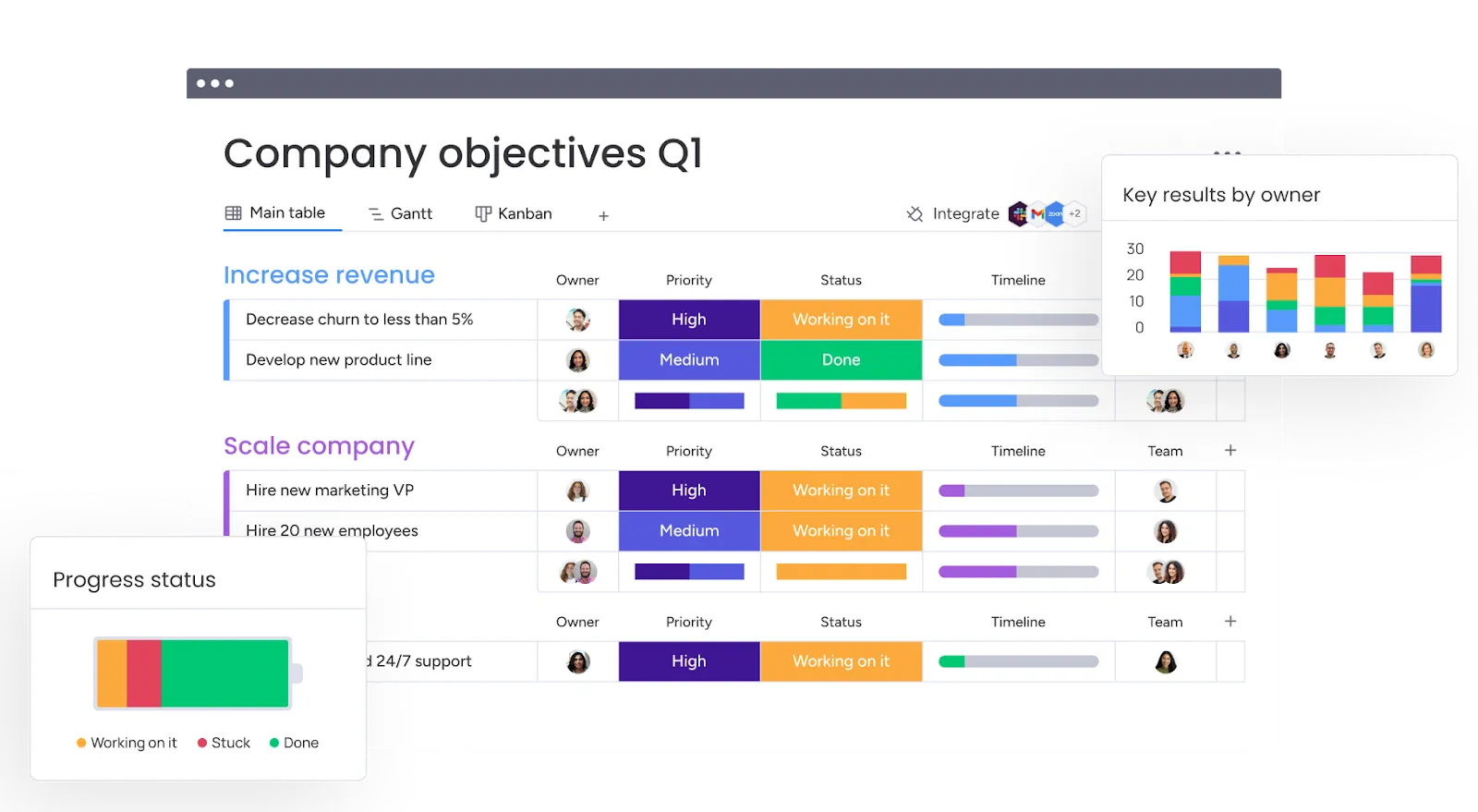
monday.com is a popular work management and project tracking platform that includes basic workload and capacity views. It’s designed primarily to help teams execute work (managing tasks, automations, and collaboration) rather than to plan and optimize people, capacity, and utilization across projects.
For organizations that need to confidently plan future capacity, balance workloads across teams, or understand utilization and availability at scale, monday.com is best viewed as a project management tool that may complement—but not replace—purpose-built resource management software. Even its recently updated AI capabilities (like the AI notetaker and workflow automation) serve to enhance operational efficiency, rather than supporting strategic resource planning.
What resource management solutions does monday.com offer?
- Workload visibility: monday.com’s workflow views show assigned tasks by person or team over time, helping managers spot basic over- or under-allocation.
- Manual effort and scheduling: teams can estimate effort, assign work on timelines or Gantt views, and manually adjust assignments as priorities change.
- High-level capacity dashboards (plan-dependent): aggregated dashboards can surface workload data across boards, but require manual configuration and do not offer true capacity forecasting or utilization modeling.
Who is monday.com best suited for?
- Execution-focused teams that primarily want visibility into what work is happening now rather than whether they have the capacity to take on future work
- Cross-functional or internal teams (marketing, product, ops) where work is fluid, priorities change frequently, and precise resource forecasting is not mission-critical
- Teams that need to track tasks, projects, and ownership, but don’t require formal capacity or utilization planning
Not suited for:
- Professional services teams managing shared talent pools
- Teams that need skills- or capacity-driven resourcing decisions
- Organizations that need a people-first planning model (including availability, utilization, and what-if scenarios) rather than a task-first view of work
monday.com pricing
- 1. Free. Up to two seats for individuals to keep track of work.
- 2. Basic. $12 per seat per month. A plan that helps you manage your team’s work with everything in Free, plus unlimited items and 5GB storage.
- 3. Standard. $14 per seat per month. Everything in Basic, along with timelines and Gantt charts, calendar views and automations.
- 4. Pro. $24 per seat per month. Everything in Standard, plus time tracking and more automations.
- 5. Enterprise. Advanced reporting and analytics, multi-level permissions, etc.
- Free trial: Yes, 14 days.
<hr>
11. ClickUp
🏢 Founded in: 2017
🎯 Primary software category: Project management
🏆 Ratings: G2: 4.7 (10,0700+ reviews) Capterra: 4.6 (4,500+ reviews)
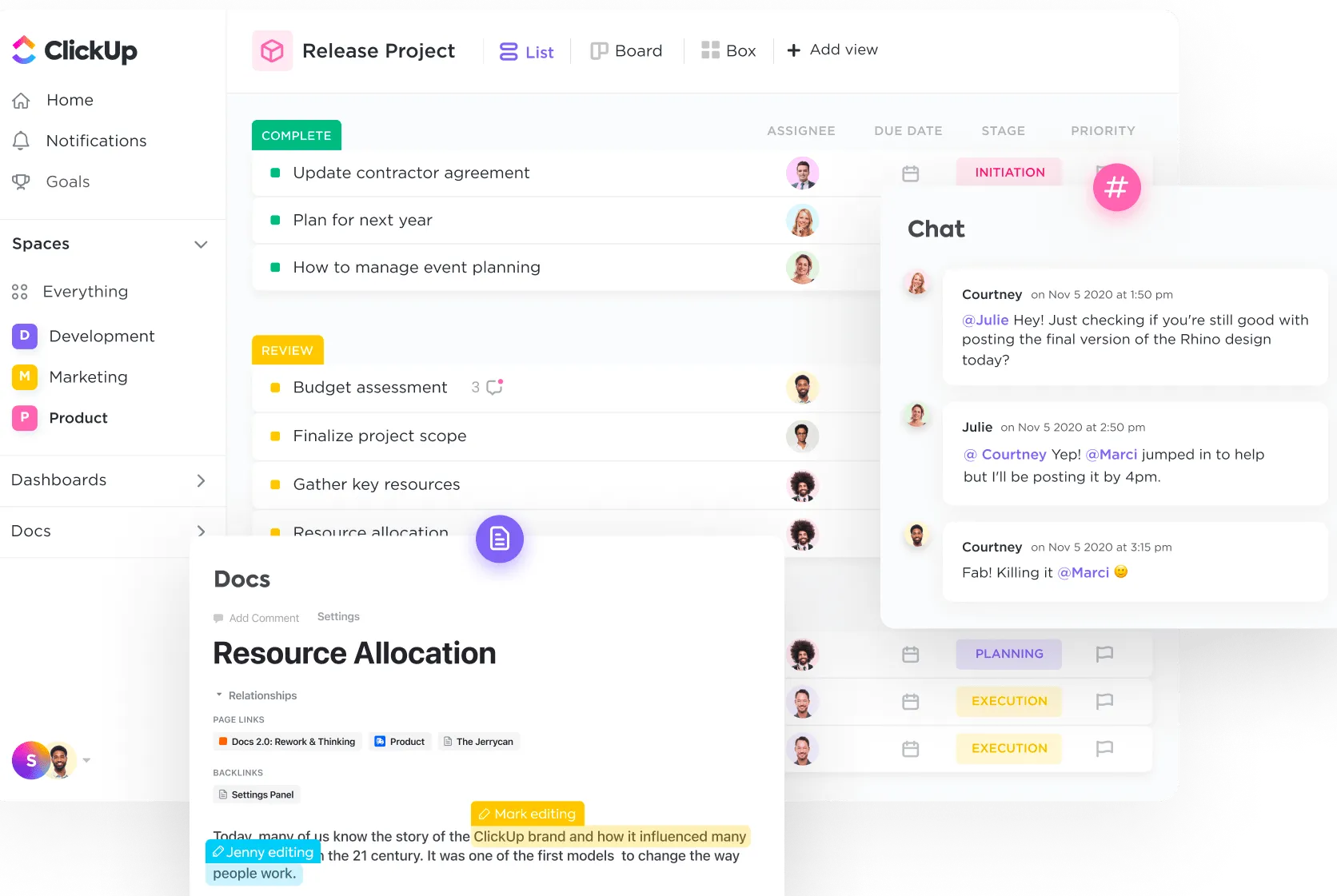
ClickUp markets itself as an all‑in‑one work platform, and is a great choice for project management. Its visually intuitive and user-friendly interface makes it easy to manage projects and tasks. Plus, they recently introduced ClickUpBrain, an AI assistant that automates repetitive tasks and saves information quickly.
However, just like Asana and Monday.com, ClickUp isn’t focused on resource management. While it includes some resource management features—particularly in its Unlimited and Business plans—its primary strengths lie in task management, dashboards and customization. ClickUp allows you to manage project tasks and view your calendar at a group level, but it doesn’t have the scheduling and data details needed to plan project work confidently.
What resource management solutions does ClickUp offer?
- Goals & Portfolios: starting with the Unlimited plan, ClickUp includes portfolio dashboards and goal tracking, letting users group tasks and projects and monitor progress.
- Workload view: available on Business and higher tiers, the Workload view displays each employee’s availability by day and shows assigned versus unassigned tasks; managers can adjust day‑to‑day availability to account for vacations.
- Native time tracking: unlimited and above plans include basic time tracking; Business adds workload management and more integrations.
- AI assistant. ClickUp Brain can answer questions like which employees have availability on a given day and helps summarisze tasks and meetings
Who is ClickUp best suited for?
- Small to mid-sized teams that want a single system for task management, docs, goals, and light workload visibility.
- Marketing, product, and internal ops teams where work is tracked primarily as tasks and tickets, and capacity planning is informal
- Teams that value customization and flexibility over structured, opinionated resource-planning workflows
Not suited for:
- Professional services organizations with 100+ people managing multiple client projects, shared resources, and utilization targets.
- Teams that need forward-looking capacity forecasting, scenario planning, or confidence in delivery before committing to new work.
- Organizations that require role-based planning, availability modeling, or utilization as a first-class metric.
ClickUp pricing
The below plans are billed yearly:
- 1. Free. A plan for personal use, with collaborative docs, Kanban boards, and more.
- 2. Unlimited. $7 per member per month. A plan for small teams with unlimited storage, Gantt charts, and more. Includes resource management.
- 3. Business. $12 per member per month. A plan for mid-sized teams that includes everything in Unlimited, along with SSO, time tracking, workload management, and timelines.
- 4. Enterprise. You need to contact ClickUp for a custom price. This is a plan for large teams.
- Free trial: No, but a free forever plan for personal use is available..*As of December 2025, the ClickUp Brain add-on now starts at $9/user/mo for AI Standard (billed annually), with an AI Autopilot tier at $28/user/mo, plus optional paid add-ons like Talk to Text and AI Notetaker.
<hr>
<cta-box>
<image-color="blue">
Try the #1* resource management software
*It’s not just our opinion: 2000+ G2 reviewers and teams like Ogilvy, Deloitte, and M&C Saatchi have voted Float the top solution in this category. Start your 30-day free trial in just a couple of clicks 🔥
<cta-button>Try for free</cta-button>
</cta-box>
<hr>
Your time and your team’s time are too valuable to be planned poorly—and resource management tools help you map out your organization’s skills, projects, and task allocation to make better planning decisions. If you need to take your project and resource planning to the next level, take a look at the shortlist of resources below:
<sme-box>
<sme-color=”yellow”>
<sme-quotes>
- A very (very) comprehensive introduction to resource management
- Some expert answers to the why is resource management important? question
- A list of 10 effective resource management best practices
- The how-to guide to fleshing out a resource management plan
- A list of 5 resource management techniques you can use to keep your projects going
- An overview of the resource leveling technique to help you complete projects with your available resources
- A deeper look at the resource smoothing technique to stay on schedule
- A summary of the resource management skills you will need as a resource manager
- The 10 headache-inducing challenges of resource management you should avoid
- A crash course in resource utilization, with two calculation methods to try
</sme-quotes>
</sme-box>
<hr>
FAQs
Some FAQs about resource management software
Resource management tools are software used to schedule, allocate, and monitor resources needed to complete projects.
For us at Float, resource management software empowers you to create project plans that set your team up for success. It ensures that the best team is assigned to the job, every time, and helps leaders make sense of their data to inform future decisions.
Here are some signs resource management software may be right for you:
- You’re unable to track how much time is allocated and spent on tasks
- Your team is growing rapidly and projects are becoming too complex to use spreadsheets
- Members of your team find themselves double-handling tasks
- Your team members are constantly over capacity
- You can’t forecast resource demand or analyze data from past projects
The right software helps you make the best use of your team’s time, keep costs down, and ensure projects are successfully delivered. Here are some additional benefits:
- Improved capacity management
- Effortless scheduling
- Assign and maintain manageable workloads
- Accurate forecasting
Spreadsheets have become jacks-of-all-trades in business operations, but especially so in resource management. According to a survey by the Resource Management Institute (RMI), roughly two thirds of companies are still using spreadsheets to supplement their project automation or standalone resource management tool.
This creates operational silos, restricts team collaboration, and often leads to the planning feeling painstakingly complex—even for the spreadsheet wizards 🪄
In contrast, a resource management tool will give you purpose-built features, e.g., availability management, click-and-drag scheduling, people skills and role rates tracking, to easily allocate work based on your team’s capacity. This way, you have a single source of truth for planning project work that’s easily accessible to (but not editable by) everyone, which minimizes the possibility of confusion or errors.
You won’t find these features in a spreadsheet simply because it is not what the spreadsheet was ever designed for 😉